

IUI vs IVF Treatment: Key Differences, Success Rates, Cost & Which Is Right for You
When comparing IUI vs IVF treatment, it is important to understand how differently they work. IUI places washed sperm directly into the uterus around ovulation. IVF stimulates the ovaries, retrieves eggs, fertilizes them in a lab, and transfers the embryo back into the uterus. IVF has a higher success rate (up to 40% per cycle for women under 35) compared to IUI (10–20% per cycle), but IUI is less invasive and costs significantly less. Doctors usually recommend trying IUI first, and moving to IVF if needed. At Dr. Archana IVF & Women Centre, our specialists help you decide which treatment is right for you based on your unique fertility profile.
What You Need to Know Before Comparing IUI vs IVF Treatment
Struggling to conceive can be one of the hardest things a couple goes through. If your doctor has mentioned IUI vs IVF treatment as options, you are probably wondering: what is the difference, which one works better, and which one is right for you?
This guide breaks it all down in plain language. No confusing medical terms. Just clear facts to help you and your doctor make the best decision.
At Dr. Archana IVF & Women Centre, we help couples navigate exactly this decision every day — with personalised guidance backed by advanced fertility care.
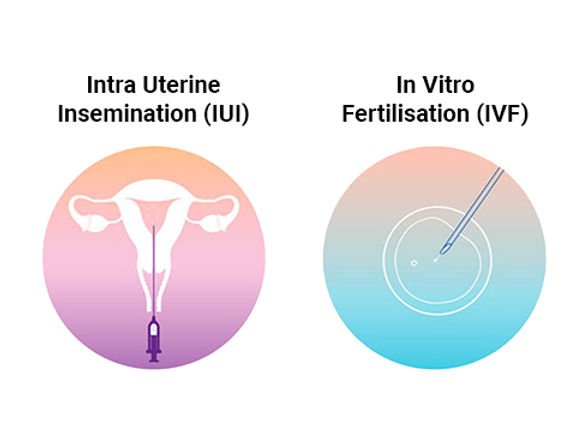
What Is IUI (Intrauterine Insemination)?
IUI stands for Intrauterine Insemination. It is one of the simplest fertility treatments available.
Here is how it works:
- A fertility doctor collects a sperm sample from your partner or a donor.
- The sperm is washed and concentrated in a lab to keep only the healthiest, most active sperm.
- Using a thin, flexible tube called a catheter, the doctor places the sperm directly inside the woman’s uterus.
- This is done around the time the woman ovulates — either naturally or with the help of fertility drugs.
The whole procedure takes only a few minutes and feels similar to a Pap smear. Most women go home the same day and return to normal activities right away.
Because the sperm is placed closer to the egg, there is a shorter distance to travel. This improves the chances of fertilization compared to natural intercourse.
IUI is typically recommended for couples with:
- Unexplained infertility (no clear medical cause found)
- Mild male factor infertility such as low sperm count or poor motility
- Cervical mucus problems that prevent sperm from reaching the egg
- Single women or same-sex couples using donor sperm
- Ovulation disorders that respond to fertility medications
IVF stands for In Vitro Fertilization. It is the most well-known and most successful assisted reproductive technology available today.
The IVF process has four main steps:
- Ovarian stimulation: The woman takes hormone injections for 10–14 days to encourage the ovaries to produce multiple eggs at once.
- Egg retrieval: A doctor removes the mature eggs from the ovaries using a small needle guided by ultrasound. This is done under light sedation.
- Fertilization in the lab: The retrieved eggs are combined with sperm in a controlled laboratory setting. Fertilized eggs that develop into embryos are monitored closely for 3–5 days.
- Embryo transfer: The best quality embryo is transferred into the woman’s uterus. If the embryo implants successfully, pregnancy begins.
The entire IVF cycle takes about 4–6 weeks from start to finish. Unlike IUI, IVF involves more steps, more medications, and more monitoring — but it also produces far higher success rates.
IVF is recommended for couples with:
- Blocked or damaged fallopian tubes
- Severe male infertility (very low sperm count or zero sperm in ejaculate)
- Failed multiple IUI cycles (usually after 3 attempts)
- Advanced maternal age, especially women over 35 or 40
- Conditions like endometriosis, PCOS, or premature ovarian insufficiency
- Couples who want genetic testing of embryos before transfer (PGT-A)
IUI vs IVF Treatment: Side-by-Side Comparison
This IUI vs IVF treatment comparison will help you understand the key differences at a glance.
Factor | IUI | IVF |
Invasiveness | Minimally invasive | Moderately invasive |
Process | Sperm injected into uterus | Egg retrieved, fertilized in lab |
Success Rate (per cycle) | 10–20% | 40% (under 35) |
Cost in India | Rs. 10,000–20,000 | Rs. 1,00,000–2,00,000+ |
Ideal For | Mild infertility, unexplained infertility | Blocked tubes, severe male factor, older age |
Twins Risk | Low (5–10%) | Moderate (20–30% with multiple embryos) |
Recovery Time | Same day | A few days |
IUI vs IVF Success Rates: Which Treatment Works Better?
Success rates are one of the most important factors couples consider when choosing between IUI and IVF treatment.
IUI Success Rate
The success rate of IUI per cycle ranges from 10% to 20%. Several factors affect IUI outcomes:
- Age: Women under 35 have better IUI success rates than women over 40.
- Use of fertility drugs: Taking clomiphene or gonadotropins alongside IUI can improve success.
- Sperm quality: Higher quality sperm increases the chance of fertilization.
- Number of cycles: Success rates improve with each attempt up to three cycles.
A widely cited study found that IUI success rates were about 16.4% per cycle for the first three attempts. Doctors generally recommend three IUI cycles before moving to IVF if pregnancy does not occur.
IVF Success Rate
IVF consistently delivers higher success rates than IUI:
- Women under 35: Around 40% live birth rate per IVF cycle.
- Women aged 35–37: About 30–33% per cycle.
- Women aged 38–40: Around 20–22% per cycle.
- Women over 40: Typically 10–15%, though donor eggs can significantly improve outcomes.
The key reason IVF is more successful is that fertilization happens in a controlled lab setting. Embryologists can select the healthiest embryos before transfer. Advanced techniques like ICSI (Intracytoplasmic Sperm Injection) and PGT-A (Preimplantation Genetic Testing) further improve IVF success rates.
IUI vs IVF Cost in India: What to Expect
The cost of IUI and IVF varies depending on your treatment plan, the clinic, and any additional procedures required.
IUI Cost in India
IUI is generally the more affordable first step. The cost per cycle is relatively low, and while adding fertility medications increases the total, it still remains the most budget-friendly fertility treatment option for most couples.
IVF Cost in India
IVF involves more steps — ovarian stimulation, egg retrieval, lab fertilization, and embryo transfer — which is reflected in its higher overall cost. Advanced add-ons like ICSI, PGT-A genetic testing, or Frozen Embryo Transfer (FET) can add further to the total investment.
The higher cost of IVF must always be weighed against its significantly higher success rate per cycle. For many couples, fewer IVF cycles may ultimately prove more cost-effective than multiple failed IUI attempts.
For an accurate cost estimate tailored to your specific condition, speak directly with the specialists at Dr. Archana IVF & Women Centre. We offer flexible payment options to ensure that cost is never a barrier to starting your fertility journey.
IUI vs IVF Over 35 and Over 40: Does Age Change the Decision?
Age is the single most important factor in fertility treatment outcomes. Here is what the evidence shows:
IUI vs IVF Success Rates Over 35
For women between 35 and 40, IUI success rates drop noticeably. Many fertility specialists suggest moving to IVF sooner rather than waiting through multiple IUI cycles, because each failed cycle costs time — and time matters when egg quality and ovarian reserve are declining.
IVF success rates over 35 are still reasonable (25–33% per cycle), especially when combined with genetic embryo testing to select chromosomally normal embryos.
IUI vs IVF Over 40
For women over 40, IUI has very low success rates — often below 5% per cycle. Most fertility doctors will recommend moving directly to IVF, or even considering donor eggs to improve the chances of a healthy pregnancy.
A study conducted on women over 40 showed a very low pregnancy rate with IUI. For this age group, the cost savings of IUI do not justify the time spent on repeated failed cycles.
Twins With IUI vs IVF treatment: What Are the Chances?
Many couples ask about the possibility of twins during fertility treatment. Here is what you need to know:
Twins With IUI
The chance of twins with IUI is low but not zero — roughly 5–10% if fertility drugs are used alongside the procedure. The risk increases slightly if multiple follicles are stimulated during the IUI cycle.
Twins With IVF
Historically, IVF had a higher twin rate because doctors transferred two or more embryos to improve the chances of success. Today, most modern fertility clinics recommend single embryo transfer (SET) to reduce the risk of twin pregnancies.
With SET, the twin rate for IVF drops to around 1–2%, similar to natural conception. Twins from IVF carry a higher health risk for both mother and babies, including premature birth and low birth weight.
IUI vs ICSI: Understanding the Difference
Some couples also hear about ICSI and wonder how it fits in.
ICSI — Intracytoplasmic Sperm Injection — is not a standalone fertility treatment. It is an advanced technique used alongside IVF. In standard IVF, sperm and eggs are placed together in a dish and fertilization happens naturally. In IVF with ICSI, a single healthy sperm is directly injected into a single egg.
ICSI is used when there is severe male infertility, previous fertilization failure with standard IVF, or when using surgically retrieved sperm. So the choice is not IUI vs ICSI — it is IUI vs IVF, with ICSI being an optional upgrade within IVF.
How to Decide Between IUI and IVF Treatment
The right fertility treatment depends on your unique situation. Here are the main factors to discuss with your fertility specialist:
- Age: Women under 35 with mild infertility may start with IUI. Women over 38 are often advised to go directly to IVF.
- Cause of infertility: Blocked tubes or severe male factor infertility calls for IVF. Mild sperm issues or unexplained infertility may respond well to IUI.
- Time: If you are older or have a lower ovarian reserve, time matters. IVF gives you faster results.
- Budget: IUI is less expensive per cycle. But if IUI fails repeatedly, the total cost of multiple failed cycles plus eventual IVF can be higher than going directly to IVF.
- Emotional readiness: IVF involves more injections, monitoring, and emotional investment. Some couples prefer to start with the less intense option first.
Your fertility doctor will conduct tests including a semen analysis, AMH (Anti-Mullerian Hormone) test, ovarian reserve assessment, and ultrasound before recommending the right path for you.
At Dr. Archana IVF & Women Centre, our specialists carry out a thorough fertility workup before recommending IUI or IVF — so you never spend time or money on a treatment that is not suited to your condition.
Final Thoughts
When weighing IUI vs IVF treatment, the right answer depends entirely on your age, diagnosis, and fertility goals. IUI is a good starting point for younger couples with mild fertility challenges. It is simple, affordable, and requires minimal recovery. IVF is the more powerful option — higher success rates, more control, and better results for complex or age-related infertility.
The most important step is to consult a qualified fertility specialist who can review your complete medical history and test results before recommending a treatment plan. The goal is not just any pregnancy — it is a healthy, successful one.
Why Choose Dr. Archana IVF & Women Centre?
At Dr. Archana IVF & Women Centre, our fertility specialists evaluate your age, ovarian reserve, sperm health, and medical history to recommend the right treatment — whether that is IUI or IVF. We combine advanced lab technology with personalised care to give every couple the best possible chance of success.
Ready to Start Your Fertility Journey?
Every fertility journey is unique. If you are trying to decide between IUI and IVF treatment, do not guess, get expert guidance. Book a free consultation at Dr. Archana IVF & Women Centre today and take the first step toward parenthood with confidence.
FAQs
Which is more successful — IVF or IUI?
IVF is significantly more successful than IUI. IVF delivers a success rate of up to 40% per cycle for women under 35, while IUI success rates range from 10% to 20% per cycle. For women over 35, the gap widens further. IVF also works for a broader range of infertility conditions that IUI cannot treat effectively.
Is IUI 100% successful?
No, IUI is not 100% successful. The per-cycle success rate ranges from 10% to 20%. Success depends heavily on factors like the woman’s age, cause of infertility, sperm quality, and whether fertility drugs are used. Women over 40 tend to have much lower IUI success rates. After three failed IUI cycles, most doctors recommend moving to IVF treatment.
Can you get twins with IUI?
Yes, but the chance is relatively low. The risk of twins with IUI is around 5–10% when fertility medications are used. Without fertility drugs, the risk is similar to natural conception. If multiple follicles are stimulated during an IUI cycle, the risk increases. Your doctor will monitor follicle development to reduce this risk.
Is IUI or IVF better over 35 or over 40?
For women over 35, IUI success rates drop significantly. Most fertility specialists recommend transitioning to IVF faster — and sometimes directly — because time and egg quality are critical factors. For women over 40, IUI has very low success rates (under 5% per cycle), and IVF or donor egg IVF is usually recommended for better outcomes.